Crash Game Comparison
Aviator Compared To Other Crash Games
See how Aviator's multiplier, RTP and round pace compare with other crash games before you decide which one to try.


Table of Contents
How We Compare Crash Games
Same Format, Different Engine
Aviator, JetX, Spaceman and similar titles share the rising-multiplier format, but each provider builds its own random number engine and math model behind it.
RTP Is the First Number to Check
Published return-to-player rates vary by a few percentage points between titles — a small gap that adds up over hundreds of rounds.
Round Pace Changes the Feel
Some crash games run a new round every few seconds, others pace it slower — the speed affects how easy it is to stick to a planned cash-out.
What Actually Differs Between Crash Games
Four areas where Aviator and its competitors genuinely diverge, beyond the shared rising-multiplier idea.

The Game That Set the Template
Aviator by Spribe was among the first crash games to popularise the multiplayer, real-time multiplier format now copied across dozens of studios.
Round Speed
Aviator rounds typically run 10-25 seconds; some competitors compress this to under 10 seconds for a faster pace.
Provably Fair Verification
Most modern crash games, Aviator included, publish a seed-based system players can use to verify a round wasn't altered after betting closed.
Multiplier Volatility
Some titles crash more often at low multipliers with occasional high spikes; others spread outcomes more evenly — check the stated RTP curve, not just the headline number.
Interface & Auto-Play Options
Auto cash-out, bet doubling and live bet feeds are common across the category, but the exact controls and mobile layout differ from one title to the next.
See The Full Comparison Below
A closer look at what changes when you switch from Aviator to a similar crash title.
Learn More
96%+ published RTP on most platforms
Rounds settle in under 30 seconds
Aviator Compared: The Short Version
Aviator remains the most recognised crash game, largely because it was early to the format and is now offered by a very wide range of operators.
That doesn't make it automatically better than newer titles — it makes it the most tested benchmark to compare others against.
Feature-By-Feature Snapshots
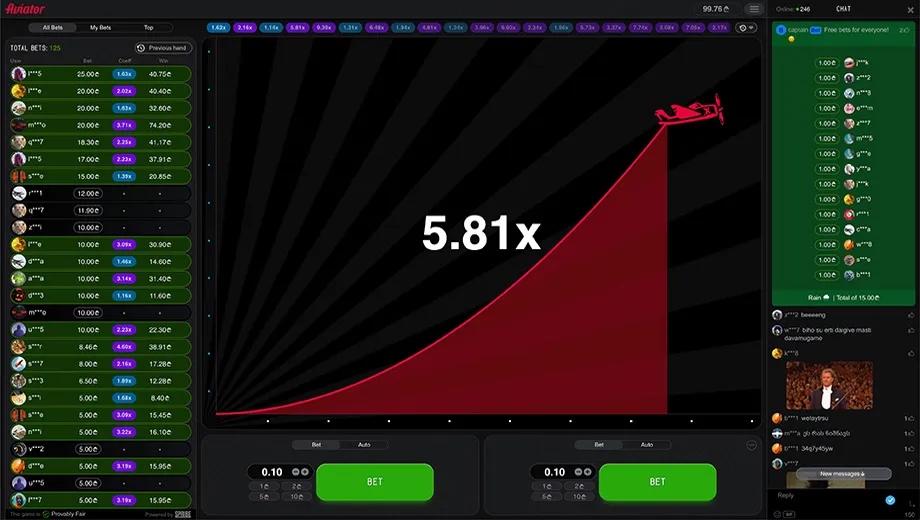
Reading the Multiplier Curve
Watching how fast the curve accelerates across a sample of rounds is a better signal than any single big win.

Predictor Tools Don't Change the Math
Third-party "predictor" dashboards analyse past rounds, but each round is generated independently — history has no bearing on the next crash point.

Fairness Checks Look Similar Across Titles
Most crash games now expose a seed or hash players can check after the round, a feature that's become close to an industry standard.
Where the Category Is Heading
Crash games keep iterating on the same core loop — here's how that's played out so far and what's coming next.
Format Established
Aviator and its earliest competitors settled on the rising-multiplier, cash-out-anytime format that now defines the category.
Fairness Became Standard
Provably fair verification moved from a differentiator to an expected baseline feature across most crash titles.
Faster Rounds, More Variants
Newer titles experiment with shorter round times and alternate visuals (planes, rockets, spacemen) while keeping the same math underneath.
- Sub-10-second rounds now common on newer platforms
Cross-Platform Comparison Tools
Sites like this one now let players compare RTP, round pace and fairness across titles before choosing where to play.
 Learn more about Lequantech.
I tried three different crash games before settling on the one with the fastest round pace — the RTP numbers were close, so speed made the real difference for me.
Laura H.
Compared four crash titles over a month
Aviator's interface felt the most polished of the four I tried, but a competitor had a noticeably higher published RTP.
Jessica L.
Checks RTP before every new game
Round speed matters more than people think — a slower-paced game gave me more time to think about my cash-out instead of reacting on instinct.
Chris P.
Prefers slower-paced rounds
The provably fair check is standard everywhere now, so I stopped treating it as a differentiator and started looking at round pace instead.
Robert W.
Verifies fairness seeds manually
Comparing three titles side by side made it obvious that RTP differences of a percent or two matter less than how disciplined you are with cash-out timing.
Lisa V.
Runs the same bankroll rule across every game
FAQ
Is Aviator the same as other crash games?
Same format, different math and interface
Does a higher RTP mean better odds every round?
RTP is a long-run average, not a per-round promise
Why do some crash games feel faster than others?
Round length varies by provider design
Can I use the same strategy across different crash games?
Bankroll habits transfer, betting systems don't
Is it worth switching games for a slightly higher RTP?
Small RTP gaps matter less than session discipline